Mental Health in Barry County: What New Local Data Reveals
In This Post
- Who Was Included in the Barry County Data?
- Mental Health in Barry County: Local Statistics
- Why Mental Health in Barry County Is Hard to Address
- How Mental and Physical Health Are Connected
- What Mental Health in Barry County Means for Families
- Frequently Asked Questions
- Find Mental Health Support in Barry County
Mental health in Barry County is a growing concern for individuals and families who need timely, local support. If you’ve ever tried to find a counselor for yourself, your child, or someone you love, you may already know the frustration: long waits, unanswered calls, and the feeling that help is available somewhere, just not close enough.
That experience reflects a documented access problem. Barry County residents face a high need for behavioral health care while the local supply of mental health professionals remains limited.
A 2024 behavioral health analysis of Barry County Medicaid enrollees — a group representing roughly one-quarter of the county’s population — found that nearly one in three had received a behavioral health diagnosis that year. Anxiety and depression diagnosis rates were above regional averages, while local access to care remained limited.
This article explains what the data shows about mental health in Barry County, the limits of that data, why access remains difficult, and where local families can find support.
Key Takeaways
- Nearly 1 in 3 Barry County Medicaid enrollees received a behavioral health diagnosis in 2024 — above the regional average.
- The data on mental health in Barry County shows anxiety and depression diagnosis rates above the regional averages among Medicaid enrollees.
- More than 40% of Michigan residents live in federally designated mental health professional shortage areas.
- People with a behavioral health diagnosis are 3 times more likely to also have a chronic physical condition.
- Telehealth expands access, while local in-person counseling remains important for many families.
Who Was Included in the Barry County Data?
The numbers in this article come from the Population Health Report CY 2024 published by Southwest Michigan Behavioral Health (SWMBH). The report analyzed Medicaid enrollment and encounter records for Barry County residents (Peterson & Kean, 2025).
The study included 16,146 Medicaid enrollees, representing roughly 25% of Barry County’s population. That makes the report an important source of local information, but it does not measure every county resident.
The findings should not be treated as an exact estimate for people with Medicare, private insurance, or no insurance. Documented diagnosis rates also depend on whether someone accessed care and received a formal diagnosis. Even with those limits, the report offers a meaningful picture of behavioral health needs among a substantial part of the county.
By the numbers: The report included 16,146 Barry County Medicaid enrollees, approximately one-quarter of the county’s population. The findings describe this Medicaid population and should not be applied directly to every county resident.
Mental Health in Barry County: Local Statistics
The findings about mental health in Barry County are striking, and they reflect concerns many local residents already recognize.
Nearly 1 in 3 Barry County Medicaid enrollees received a behavioral health diagnosis in 2024. Specifically, 32.2% of Barry County Medicaid enrollees had at least one behavioral health diagnosis — higher than the regional average of 29.5% across the broader Southwest Michigan Behavioral Health service area. That gap is statistically significant. Barry County isn’t just tracking with regional trends; it’s running ahead of them (Peterson & Kean, 2025).
Anxiety is the leading diagnosis — and it’s elevated. Barry County’s anxiety diagnosis rate of 17.7% is notably higher than the regional rate of 13.8%. For adults specifically, 22.9% received an anxiety diagnosis in 2024. That’s nearly 1 in 4 adults in the Medicaid population studied. Because this is a diagnosis rate within a specific insurance group, it should not be compared directly with national estimates for all adults experiencing any mental illness.
Depression rates are significantly above the regional average. Barry County’s depressive disorder rate of 14% is higher than the regional 11.3%. Among adults, 19.3% — nearly 1 in 5 — received a depressive diagnosis in 2024.
ADHD is one of the more common diagnoses, especially among children. ADHD was documented for 6.8% of Barry County Medicaid enrollees, a rate above the broader Southwest Michigan Behavioral Health regional average. Among children in the report, 9.6% had an ADHD diagnosis, making it the most commonly documented behavioral health condition in that age group. National estimates use different populations and methods, so they should not be treated as direct comparisons with the Barry County data.
32.2%
of Barry County Medicaid enrollees had a behavioral health diagnosis in 2024
17.7%
anxiety diagnosis rate — significantly above the regional 13.8%
14%
depressive disorder rate — above the regional 11.3%
Why Mental Health in Barry County Is Hard to Address
 High need is only half the picture. The other half is access — and that’s where Barry County, like much of rural Michigan, faces a serious challenge.
According to the Citizens Research Council of Michigan, more than 40% of the state’s population — over 4.2 million people — live in federally designated mental health professional shortage areas. Barry County sits in one of those shortage regions. The provider-to-resident ratio here is roughly 1 mental health professional for every 821 residents. Kent County, by comparison, has approximately 1 provider per 350 residents — less than half the gap.
What does that mean in practical terms? Longer wait times. Fewer specialists. Families driving 30, 40, or 50 minutes each way to see a counselor. And for people who can’t manage that — because of work schedules, childcare, transportation, or simply not knowing where to start — the need quietly goes unmet.
This isn’t a character flaw in the community. It’s a structural gap that’s been building for years, and it shows up in the data.
“More than 40% of Michigan residents live in areas with a documented shortage of mental health professionals. Barry County is one of them.”
— Citizens Research Council of Michigan
How Mental and Physical Health Are Connected
 One of the most important findings in the 2024 data is the relationship between mental and physical health — and it’s one that doesn’t get nearly enough attention in everyday conversation.
Barry County Medicaid enrollees with a behavioral health diagnosis were 3 times more likely to also have a chronic physical condition than enrollees without a behavioral health diagnosis (Peterson & Kean, 2025). Among those with both a behavioral health diagnosis and at least one chronic condition, the hospitalization rate was 13.6% — compared to 4% for those without multiple conditions.
This is consistent with what national research shows. NAMI reports that people with depression have a 40% higher risk of developing cardiovascular and metabolic diseases than the general population. Mental health isn’t separate from physical health. They influence each other constantly.
The most common chronic conditions in Barry County — obesity (11.6%), hypertension (11.2%), and high cholesterol (8.5%) — were all significantly more prevalent among people who also had a behavioral health diagnosis. Someone managing anxiety alongside hypertension isn’t dealing with two separate problems. They’re dealing with one interconnected experience that often needs integrated care.
What this means: Addressing mental health isn’t just about emotional wellbeing — it’s one of the most practical things a person can do for their physical health, too.
What Mental Health in Barry County Means for Families
The numbers describing mental health in Barry County tell a story, but they also describe real people. The 32.2% figure represents people within Barry County’s Medicaid population: parents, workers, teenagers, and older adults managing behavioral health concerns alongside everyday responsibilities.
A few things the data points to directly:
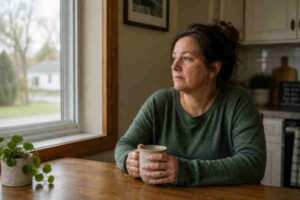 Adult women are the most affected group. 40.9% of adult women in the study had a behavioral health diagnosis — the highest of any group. Anxiety and depression were the primary drivers.
- Children and teens aren’t immune. 25.7% of children in the study had a behavioral health diagnosis, with ADHD, anxiety, and adjustment disorders leading the way. Early support matters.
- Undiagnosed doesn’t mean unaffected. Medicaid encounter data captures documented diagnoses among people who accessed care. It does not count everyone who may be struggling without evaluation, diagnosis, or treatment.
The counselors at White Oak Counseling & Recovery work with individuals and families across this community every day. They see the effects of this gap firsthand — and they’re committed to being part of closing it. White Oak accepts most major insurance plans, most managed Medicaid plans, and self-pay clients. Telehealth counseling is available statewide for Michigan residents who can’t easily make it to the Middleville office.
If you’ve been putting off making a call, this is a reasonable moment to reconsider. You’re not unusual for struggling. You’re part of a community that’s dealing with something real.
Frequently Asked Questions
Find Support for Mental Health in Barry County
The data on mental health in Barry County shows both a substantial need for care and continuing barriers to receiving it. A diagnosis is not required before someone reaches out for support. Counseling may be appropriate when anxiety, depression, grief, trauma, relationship problems, or other concerns begin affecting daily life.
Understanding mental health in Barry County can help families recognize that these concerns are common, treatable, and worthy of support.
White Oak Counseling & Recovery provides counseling for adults, couples, families, children, teens, and veterans at its Middleville office. Telehealth counseling is also available throughout Michigan. Most major insurance plans, most managed Medicaid plans, and self-pay are accepted.
Ready to Talk?
White Oak Counseling & Recovery serves Middleville, Barry County, and West Michigan. Telehealth is available statewide in Michigan. Most major insurance and most managed Medicaid plans are accepted.
Call 269-205-2402
Monday–Friday, 10am–5pm · Intake appointments 10am–4pm
Sources: Peterson, M. & Kean, M. (2025). Population Health Report CY 2024 – Barry County. Southwest Michigan Behavioral Health. | National Alliance on Mental Illness. (2025). Mental Health By the Numbers. nami.org. | Citizens Research Council of Michigan. (2022). Michigan (Still) Falls Short on Mental Health Services. crcmich.org.