
Why Your Mind May Feel Cloudy, Slow, or Overloaded
Brain fog can be frustrating because it is hard to explain and easy for other people to misunderstand. You may look fine on the outside, but inside, you feel slow, scattered, forgetful, or mentally worn out. You may lose your train of thought, forget simple things, reread the same sentence, or feel like your brain is working harder than it should.
Brain fog is not a formal diagnosis. It is a common way people describe problems with thinking, focus, memory, attention, word-finding, and mental clarity. The Cleveland Clinic describes brain fog as a group of symptoms that affect cognitive function, including thinking, memory, concentration, and attention.
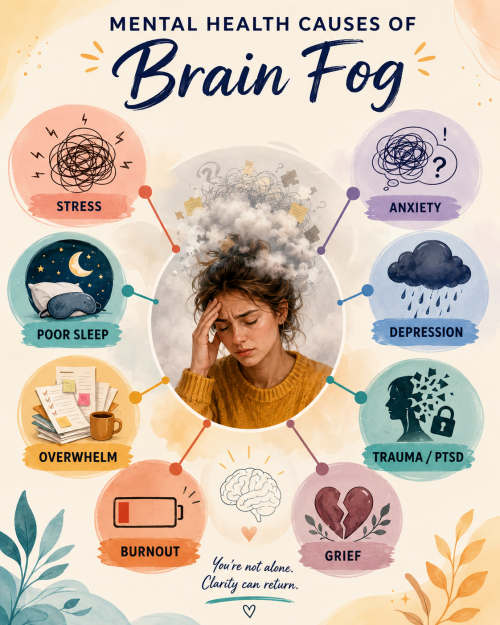
Brain fog can have many causes. Sometimes it is connected to stress, anxiety, depression, grief, trauma, burnout, or poor sleep. Other times, it may be related to a physical health condition, long COVID, fibromyalgia, ADHD, thyroid problems, hormone changes, chronic pain, medication side effects, or several things happening at the same time.
Table of Contents
- What Is Brain Fog?
- Brain Fog Symptoms
- What Brain Fog Feels Like
- What Brain Fog Can Look Like to Others
- Who May Be Most Affected by Brain Fog?
- Mental Health Causes of Brain Fog
- Physical Health Conditions That May Cause or Increase Brain Fog
- Medicines That May Cause or Increase Brain Fog
- What Else May Help Brain Fog?
- When to Get Help for Brain Fog
- Brain Fog FAQ
What Is Brain Fog?
Brain fog means your thinking feels cloudy, slow, scattered, or less sharp than usual. It may affect focus, memory, word-finding, decision-making, mental energy, or your ability to keep up with daily tasks.
People often describe it as feeling mentally “fuzzy” or “not like myself.” NHS Inform describes long-COVID brain fog as symptoms that may include poor concentration, confusion, slower thinking, fuzzy thoughts, forgetfulness, lost words, and mental fatigue.
These symptoms are different from ordinary forgetfulness. Everyone forgets things sometimes. This is more persistent or disruptive. It can make normal tasks feel harder than they used to feel. It can also create worry, shame, or frustration when you cannot think as clearly as you expect yourself to.
Brain Fog Symptoms
Symptoms can vary. Some people notice mostly memory problems. Others notice trouble focusing, word-finding, mental fatigue, or decision-making problems.
Common symptoms include:
- Trouble concentrating
- Forgetfulness
- Losing your train of thought
- Difficulty finding the right word
- Feeling mentally slow
- Feeling easily distracted
- Rereading without absorbing the information
- Difficulty making decisions
- Feeling mentally tired after simple tasks
- Forgetting appointments or recent conversations
- Feeling overwhelmed by normal responsibilities
- Making more small mistakes than usual
- Trouble organizing tasks or planning steps
- Feeling disconnected, spaced out, or cloudy
Brain fog can also happen with physical symptoms. Depending on the cause, a person may also notice fatigue, headaches, dizziness, poor sleep, muscle pain, stomach symptoms, body tension, low mood, anxiety, or changes in energy.
What Brain Fog Feels Like
This fogginess can feel like your mind is working through a heavy filter. You may know what you want to say, but the words do not come. You may start a task and forget what you were doing. You may sit down to work and feel like your brain will not “turn on.”
People often describe brain fog this way:
- “My brain feels slow.”
- “I cannot focus long enough to finish anything.”
- “I know I should remember this, but I do not.”
- “I keep losing words in the middle of a sentence.”
- “I feel like I am present, but not fully there.”
- “Simple decisions feel exhausting.”
- “I can function, but everything takes more effort.”
The problem can be especially upsetting for people who are used to being organized, productive, dependable, or mentally sharp. It may feel like a loss of confidence. A person may wonder if they are getting lazy, careless, older, or less capable. In many cases, the issue is not character. It is a sign that the brain, body, emotions, or nervous system may be overloaded or affected by another condition.
What Brain Fog Can Look Like to Others
These symptoms can be misread by other people. A person with brain fog may look distracted, unmotivated, careless, or distant, even when they are trying hard.
What Others May Notice
- Forgetting details from conversations
- Taking longer to respond
- Missing deadlines or appointments
- Seeming distracted or checked out
- Starting tasks but not finishing them
- Asking the same question more than once
- Having trouble following instructions
- Making more mistakes than usual
- Avoiding decisions
- Pulling back from plans or responsibilities
- Seeming irritable when overwhelmed
What May Be Happening Inside
- Mental exhaustion
- Embarrassment
- Fear of being judged
- Frustration with yourself
- Worry that something is wrong
- Shame about not keeping up
- Feeling overloaded by small tasks
- Trying hard but still falling behind
- Feeling disconnected from your normal self
- Needing quiet but not knowing how to ask
- Feeling misunderstood by people you care about
This is one reason brain fog can affect relationships. The person experiencing it may feel misunderstood, while others may not realize how much effort it takes to get through the day.
Who May Be Most Affected?
Brain fog can affect many people, but research supports stronger links in certain conditions and life stages.
Groups and conditions with stronger evidence
- People with long COVID may report poor concentration, slower thinking, forgetfulness, word-finding problems, and mental fatigue. Long-COVID brain fog symptoms are recognized by NHS Inform, and research on cognitive impairment after illness and medication exposure shows that cognitive symptoms can have several overlapping causes.
- People with fibromyalgia commonly report cognitive symptoms, often called fibro fog. Mayo Clinic describes fibromyalgia as involving widespread pain along with fatigue, sleep, memory, and mood issues. Women are more likely than men to have fibromyalgia. The CDC reports that women are twice as likely to have fibromyalgia as men.
- People with hypothyroidism may report fatigue, forgetfulness, and difficulty focusing. The American Thyroid Association explains hypothyroid brain fog from the patient’s perspective.
- Women in perimenopause or menopause may report more cognitive complaints. A peer-reviewed review on menopause and cognitive impairment states that cognitive complaints are more common near menopause, when hormone levels are changing.
- People with ADHD may experience executive function problems that feel like brain fog, including trouble with attention, working memory, planning, and follow-through.
- People under high stress, poor sleep, or emotional overload may notice more trouble with focus, memory, and decision-making.
Mental Health Causes
Brain fog is not always caused by a mental health concern. But mental health can strongly affect focus, memory, motivation, and mental clarity. When the nervous system is overloaded, the brain may spend more energy managing fear, sadness, pressure, conflict, or emotional pain. That can leave less energy for attention and clear thinking.
Stress and Overwhelm
Stress can narrow attention. When your brain is focused on problems, pressure, conflict, finances, parenting, caregiving, work demands, or fear of what might happen next, there may be less mental energy left for focus and memory.
Overwhelm can also make simple tasks feel complicated. A person may not be unable to think; they may be trying to think while carrying too much at once. If stress has become hard to manage, stress and burnout counseling can help you sort through the pressure and build more realistic supports.
 Anxiety
Anxiety can make the brain feel crowded. Worry, fear, what-if thinking, body tension, and mental scanning can interrupt concentration. A person with anxiety may appear forgetful or distracted because their attention is repeatedly pulled toward possible threats or problems.
Anxiety-related foggy thinking may feel like racing thoughts and blank thoughts at the same time. The mind is busy, but clear thinking is still hard. When worry, panic, or fear are part of the pattern, anxiety counseling can help calm the mental and physical stress response.
Depression
Depression can affect more than mood. It can also affect concentration, memory, decision-making, motivation, and mental speed. Some people with depression describe feeling mentally heavy, slowed down, or unable to think clearly.
Depression-related cognitive symptoms may show up as trouble starting tasks, forgetting details, avoiding decisions, or feeling like everyday responsibilities require too much effort. Depression counseling can help address the emotional heaviness and daily patterns that may be affecting motivation and mental clarity.
Trauma and PTSD
Trauma can affect attention and memory because the nervous system may stay on alert. When the brain is focused on safety, threat, or emotional protection, it can be harder to stay present, process information, or organize thoughts.
Some people with trauma also experience dissociation, sleep problems, intrusive memories, emotional numbness, or body tension. These symptoms can make focusing harder. Trauma counseling and PTSD counseling can help people understand triggers, reduce shame, and work toward feeling safer in their body and mind.
Grief
Grief can make thinking feel slow and scattered. After a death, divorce, family conflict, major life change, or other painful loss, the brain may be carrying more emotional weight than usual.
Grief-related brain fog can include forgetfulness, trouble focusing, exhaustion, and feeling disconnected from normal life. This does not mean someone is weak. It often means the mind and body are adjusting to a painful loss. Grief counseling can help people process loss without having to carry it alone.
Burnout
Burnout can happen when stress lasts too long without enough recovery. It can affect motivation, patience, focus, sleep, and emotional control. A burned-out person may still be functioning, but their mental energy is low.
Mental fog from burnout may feel like hitting a wall. You may know what needs to be done, but your brain and body feel resistant, tired, or numb.
ADHD
ADHD is not the same as brain fog, but ADHD symptoms can feel similar. Adults with ADHD may struggle with working memory, task initiation, focus, time management, organization, and follow-through.
Executive function problems can make a person forget instructions, lose track of tasks, misplace items, or feel mentally scattered. When ADHD overlaps with anxiety, depression, poor sleep, or stress, the foggy feeling may become worse.
How Counseling Can Help with Mental Health-Related Brain Fog
Counseling does not treat every cause of brain fog. If the issue is related to a thyroid condition, long COVID, medication side effect, vitamin deficiency, sleep disorder, hormone change, or another medical condition, medical care may be needed.
However, counseling can help when brain fog is connected to stress, overwhelm, anxiety, depression, trauma, grief, burnout, relationship strain, or emotional overload.
- Identify patterns: You may notice symptoms get worse after conflict, poor sleep, heavy work demands, grief triggers, trauma reminders, or long periods without rest.
- Reduce overwhelm: Counseling gives you a place to sort through what feels heavy instead of trying to hold everything alone.
- Calm anxiety: Counseling can help you recognize anxious thought patterns, reduce avoidance, and practice skills that support clearer thinking.
- Address depression: Counseling can help you rebuild structure, challenge discouraging thoughts, and take small steps toward better functioning.
- Work with trauma responses: Trauma-informed counseling can help you understand triggers, build grounding skills, and reduce shame.
- Build practical supports: Counseling can help you create reminders, routines, boundaries, communication tools, rest patterns, and task-management systems.
For many people, this cloudy thinking improves when the mind has fewer unresolved emotional demands competing for attention. Individual counseling can help you sort through the mental health side of brain fog while you also address any medical or medication-related concerns with the right healthcare provider.
Physical Health Conditions That May Cause or Increase Brain Fog
Brain fog can also be connected to medical or physical conditions. This is why it is important not to assume it is “just stress.” Stress may be part of the picture, but it may not be the whole picture.
Long COVID
Long COVID is one of the better-known medical conditions linked with brain fog. People with long COVID may report trouble concentrating, memory problems, slowed thinking, word-finding trouble, and mental fatigue. NHS Inform lists brain fog as a long-COVID symptom, and the NHS includes problems with memory and concentration among long-COVID symptoms.
Long-COVID mental cloudiness can be discouraging because it may affect work, school, relationships, and daily routines. If symptoms began after COVID-19 or another significant illness, it is worth discussing them with a medical provider.

Fibromyalgia, Chronic Pain, and Chronic Illness
Fibromyalgia can involve widespread pain, fatigue, sleep problems, and cognitive symptoms. Many people call the cognitive symptoms “fibro fog.” Mayo Clinic describes fibromyalgia as a long-term condition involving widespread pain along with fatigue and issues with sleep, memory, and mood.
Chronic pain and chronic illness can also drain mental energy. Pain pulls attention. Fatigue reduces stamina. Medical appointments, uncertainty, and daily limitations can create emotional stress. Symptoms may be more noticeable when chronic illness overlaps with poor sleep, medication side effects, depression, anxiety, or high stress.
Thyroid Conditions
Thyroid problems can affect energy, mood, sleep, and thinking. Hypothyroidism, or low thyroid function, is often associated with fatigue and difficulty focusing. The American Thyroid Association describes hypothyroid brain fog as commonly involving fatigue, forgetfulness, and difficulty focusing.
If mental fog appears with fatigue, cold sensitivity, weight changes, hair changes, constipation, low mood, or other thyroid-related symptoms, a medical provider can decide whether thyroid testing is appropriate.
Hormone Changes, Perimenopause, and Menopause
Hormone changes may affect sleep, mood, memory, and concentration. During perimenopause and menopause, some women report word-finding problems, forgetfulness, poor concentration, and mental fatigue.
A peer-reviewed review on menopause and cognitive impairment states that cognitive complaints are more common near menopause, when hormone levels are changing. This does not mean every woman will experience brain fog, and it does not prove that hormones are the only cause. Sleep changes, stress, mood, hot flashes, and health history may also matter.
Poor Sleep
Poor sleep can make almost everything harder. It can affect focus, reaction time, emotional control, memory, and decision-making. A person who is not sleeping well may feel foggy even if nothing else is wrong.
Sleep problems can also overlap with anxiety, depression, trauma, chronic pain, menopause, thyroid conditions, and long COVID. When sleep is poor, other symptoms often feel worse.
Vitamin or Nutrient Deficiencies
Some vitamin or nutrient deficiencies can affect energy and thinking. Examples may include vitamin B12 deficiency, iron deficiency, or vitamin D deficiency. A medical provider can help decide whether testing is appropriate based on symptoms, history, and risk factors.
Medical Steps That May Help
If brain fog is new, worsening, persistent, or interfering with daily life, it may be worth talking with a medical provider. Depending on your symptoms, they may consider thyroid function, anemia, vitamin B12, iron, vitamin D, sleep problems, hormone changes, long COVID, chronic illness, chronic pain, or medication effects.
- Write down when the brain fog started.
- Track sleep, pain, fatigue, mood, illness, and medication changes.
- List all prescription medicines, over-the-counter medicines, and supplements.
- Ask whether testing or medication review is appropriate.
- Tell your provider if symptoms are affecting work, driving, parenting, safety, or daily functioning.
Medicines That May Cause or Increase Brain Fog
Some medicines can cause or increase cloudy thinking in some people. This may happen because a medicine causes sedation, slowed thinking, dizziness, confusion, memory problems, or attention problems.
A peer-reviewed review on drug-induced cognitive impairment explains that many medication classes can affect cognition, including benzodiazepines, Z-drugs, opioids, first-generation antihistamines, antidepressants, antiseizure medications, drugs for urinary incontinence, statins, and others.
Medicines that may contribute to brain fog in some people include:
- Benzodiazepines, sometimes prescribed for anxiety, panic, or sleep
- Z-drugs, sometimes prescribed for insomnia
- First-generation antihistamines, including some older allergy or sleep products
- Opioid pain medicines
- Some muscle relaxers
- Some anti-seizure medicines
- Some tricyclic antidepressants
- Some medicines with anticholinergic effects
- Some nausea, dizziness, or motion-sickness medicines
- Some combinations of medicines, especially when several sedating medicines are used together
What About Statins?
Some people report memory problems or brain-fog-like symptoms while taking statin medicines. However, the research is mixed. A 2024 review on statins and cognitive health found that studies have reported harmful, neutral, and protective findings. Because the evidence is not one-sided, it would not be accurate to say that statins generally cause brain fog.
Statins are often prescribed to reduce cardiovascular risk. If someone believes their symptoms started or worsened after beginning a statin, the safest next step is to talk with the prescribing provider or pharmacist. Do not stop a prescribed medicine without medical guidance.
Medicine Timing and Combinations Matter
Medicine-related brain fog may be more likely when someone starts a new medicine, changes a dose, takes multiple medicines, uses sedating medicines, mixes medicine with alcohol, or has a condition that changes how medicine is processed.
Medication Safety Step
If brain fog began after a medicine change, write down the timing, dose, symptoms, and any other medicines or supplements you take. Bring that information to your prescriber or pharmacist so they can review possible causes. Do not stop or change prescribed medicine without medical guidance.
What Else May Help Brain Fog?
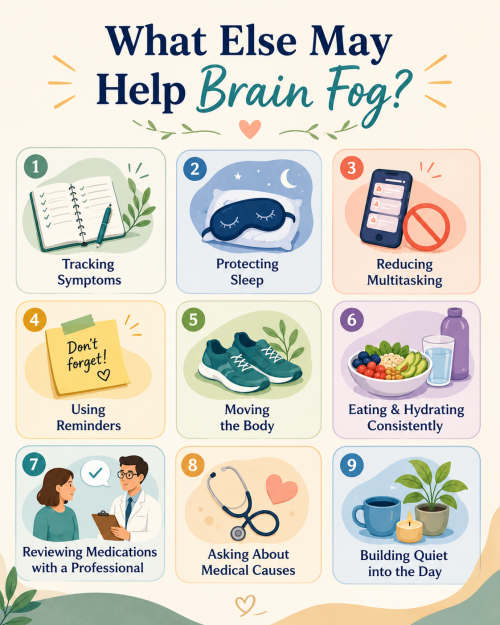
Because this condition can have many causes, the right help depends on what is contributing to it. These steps may help many people, especially when brain fog is connected to stress, sleep, anxiety, burnout, or daily overload.
Reduce Mental Load
- Use one calendar instead of several systems.
- Write tasks down instead of holding them in your mind.
- Use alarms, reminders, sticky notes, and checklists.
- Break large tasks into smaller steps.
- Reduce multitasking when possible.
- Give yourself more transition time between tasks.
Support the Body
- Protect sleep as much as possible.
- Eat and hydrate consistently.
- Move your body in ways that fit your health.
- Limit late caffeine if it affects sleep.
- Track pain, fatigue, mood, and brain fog patterns.
- Ask a medical provider about possible physical causes.
Track Your Symptoms
Write down when brain fog is better or worse. Track sleep, stress, food, hydration, caffeine, pain, mood, medicine changes, hormone changes, illness, and major life events. A simple symptom log can help you see patterns and give better information to your counselor, doctor, or prescriber.
 Protect Sleep
Sleep affects focus, memory, emotional control, and energy. A steady bedtime, reduced screen use before bed, limited late caffeine, and a calming evening routine may help.
Reduce Multitasking
Brain fog often gets worse when you try to hold too much in your mind. Use one list, one calendar, and one task at a time when possible.
Use External Reminders
Use alarms, sticky notes, phone reminders, checklists, calendars, and written instructions. This is not a weakness; it is a practical way to lower the demand on working memory.
Move Your Body
Gentle movement may support sleep, mood, stress regulation, and energy. Walking, stretching, or other appropriate movement may help, depending on your health and ability level.
Eat and Hydrate Consistently
Skipping meals, dehydration, too much caffeine, or blood sugar swings may make some people feel foggier. Regular meals and enough fluids may support steadier energy.
Build Quiet into the Day
A constantly stimulated brain can feel overloaded. Short breaks, quiet time, prayer, breathing exercises, journaling, time outside, or brief moments without screens may help your mind reset.
When to Get Help for Brain Fog
Consider getting help if brain fog is new, getting worse, affecting work or relationships, causing safety concerns, or making daily life harder. It is also important to seek medical care if your symptoms appear after a medicine change, illness, head injury, or major change in health.
Get medical help quickly if brain fog appears with:
- Sudden confusion
- Weakness
- Trouble speaking
- Fainting
- Severe headache
- Chest pain
- Sudden neurological or medical symptoms
If it seems connected to stress, anxiety, depression, grief, trauma, burnout, or emotional overload, counseling may be a helpful place to start. You do not have to wait until everything falls apart to ask for support.
At White Oak Counseling & Recovery, we help people work through stress, anxiety, depression, trauma, grief, burnout, and other concerns that can affect daily functioning. Counseling can help you understand what may be weighing on your mind and take practical steps toward feeling clearer, steadier, and more like yourself again.
White Oak Counseling & Recovery provides counseling in Middleville, Michigan, and also offers telehealth counseling for clients located in Michigan.